Inconsistency is the silent killer of digital trust. You can spend thousands of dollars on targeted performance marketing, but if your website looks like one company built it and your Instagram looks like a completely different business runs it, you are actively losing money.
When a high-ticket B2B client or a local retail customer lands on your digital assets, their brain is subconsciously searching for trust signals. They make a judgment within the first three seconds. If your fonts are mismatched, your colors clash, and your tone shifts from highly professional on LinkedIn to overly casual on Facebook, that trust evaporates instantly.
This is exactly why brand guidelines matter. They act as the structural foundation for your entire business presence. At Abowe Digital, we know that operating without a unified rulebook forces you to reinvent the wheel every single time you publish a post or update a landing page. In a marketplace saturated with noise, your brand needs a dedicated system to remain recognizable, authoritative, and profitable.
Here is the zero-fluff breakdown of how establishing a documented brand identity transforms your business from a chaotic hustle into a scalable digital machine.
The “Silent Killer” of Online Conversions
Many business owners treat their digital presence as an afterthought. They choose a font because it looks nice that day, or they pick a color because it fits a specific graphic. This creates a fragmented visual identity that confuses the consumer.
Imagine walking into a high-end restaurant. The menu is printed in an elegant serif font, but the sign outside looks like it was painted by a teenager, and the staff is speaking to you in street slang. The disconnect creates immediate hesitation. The same psychological friction happens online. When your brand lacks a cohesive system, your audience assumes your internal business operations are equally disorganized.
By defining your digital authority through strict guidelines, you eliminate this friction. You build a predictable and professional environment for your user. When they see your specific shade of green or read a headline written in your distinct brand voice, they immediately know they are dealing with an established market leader.
Three Reasons Why Brand Guidelines Matter for Revenue
Creating a brand book is not just an exercise for graphic designers. It is a fundamental business operation that directly impacts your bottom line.
- Accelerated Decision Speed and Operational Efficiency
Without guidelines, every single piece of content requires a massive mental effort. Your team wastes hours debating which logo variation to use, which hex code is correct, or what font size belongs on a graphic. Brand guidelines remove this friction entirely. They provide a strict framework so your team can focus on creating high-converting content rather than arguing about design choices. This operational speed allows you to launch campaigns faster and outpace your competitors.
- Premium Value Perception
A cohesive visual identity allows you to charge premium prices. When your digital infrastructure looks flawless across every platform, you position your business as a high-end architect rather than a cheap freelancer. Clients are willing to pay more for services that look and feel secure.
- Maximum Brand Recognition and Trust
Repetition creates recognition. When you use the exact same visual cues repeatedly, you train your audience to recognize your business without even seeing your logo. To prove this point, industry data backs it up. According to a comprehensive report by Marq (formerly Lucidpress) on brand management, presenting a brand consistently across all platforms can increase revenue by up to 23 percent. Consistency directly translates to financial growth.
The Core Pillars of a Strong Identity
To build an airtight digital presence, your guidelines must clearly define three essential pillars. If you skip any of these, your brand will eventually leak authority.
Pillar 1: Visual Identity and Technical Specifications
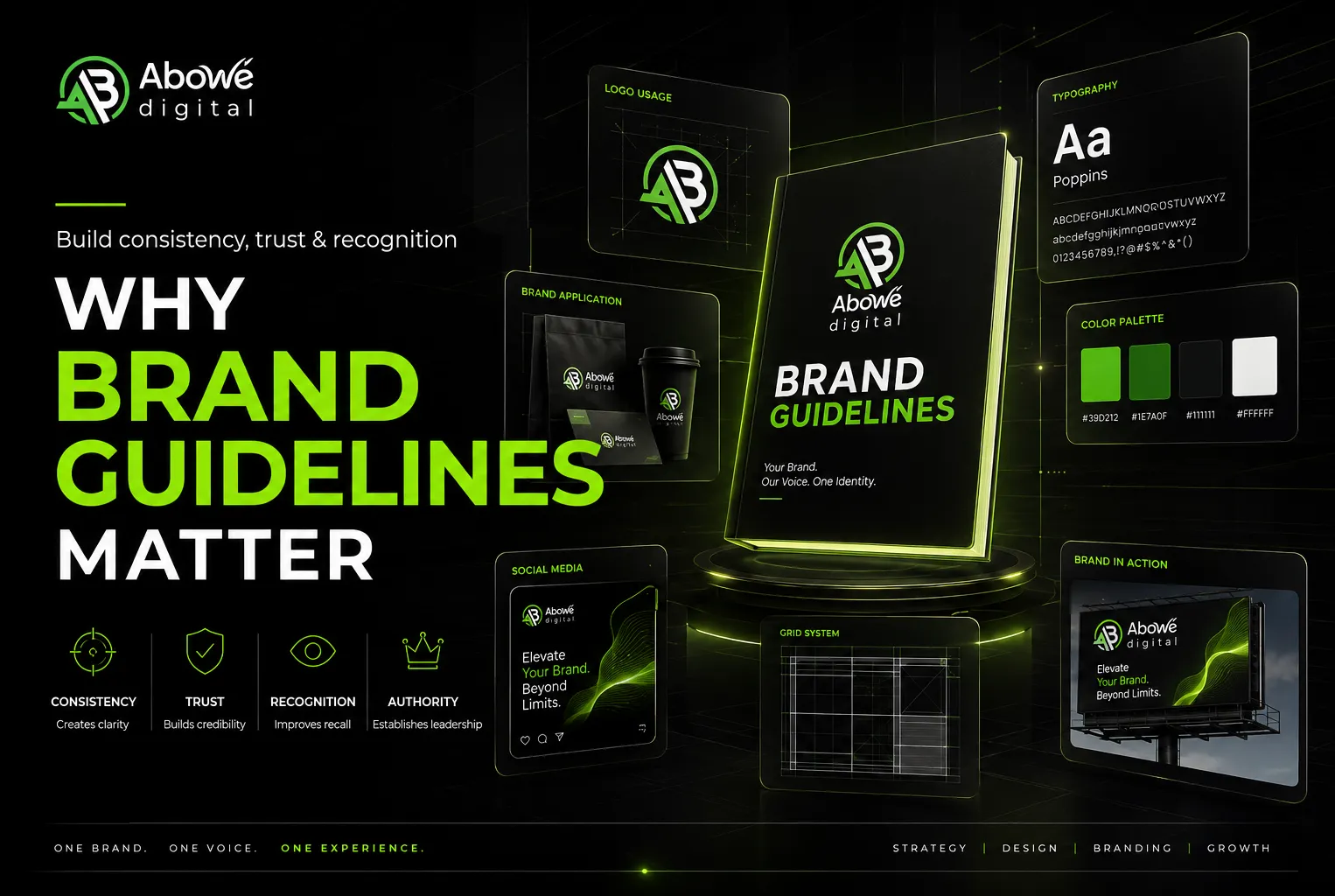
Your visual identity goes far beyond just slapping a logo on a page. It requires exact, documented technical specifications. Your brand guidelines must list the exact primary and secondary Hex, RGB, and CMYK color codes. It must include the specific typography hierarchy, detailing exactly which font is used for H1 headlines, H2 subheadings, and regular paragraph text. By locking in these visual rules, any designer or developer you hire can seamlessly replicate your brand’s aesthetic.
Pillar 2: Your Documented Brand Voice
How you speak to your customers is just as important as how you look. Your brand voice dictates the personality of your written content. Are you aggressive and data-driven? Are you warm and community-focused? Your guidelines need to establish rules for vocabulary, sentence structure, and overall tone. This ensures that an email written by your sales team sounds exactly like a caption posted by your marketing team.
Pillar 3: Unwavering Brand Consistency
The final pillar is execution. Brand consistency means deploying your visual identity and brand voice flawlessly across every single touchpoint. Whether a client is reading a targeted cold outreach message, visiting your Web Development Services page, or interacting with your Social Media Management team, the experience must be identical. We have seen this methodology completely rescue local businesses, as documented in our breakdown of The Viral Local Retail Engine.
How to Implement Your Guidelines Today
You do not need a fifty-page corporate manual to start. You just need a definitive starting point. Open a simple document and lock in your core assets.
Define your primary logo and the rules for its clear space. List your two main brand colors with their exact hex codes. Pick two fonts: one for headings and one for readable body text. Finally, write three sentences describing how your business should sound when speaking to a customer. Once you establish this baseline, you must enforce it ruthlessly.
For businesses relying heavily on B2B lead generation, this consistency is non-negotiable. Executive decision-makers can spot an amateur setup from a mile away. Discover how a unified presence transforms outbound sales in our detailed Efficiency Audit Case Study.
Visualizing the Impact: The Consistency Matrix
To understand the tangible difference between a scattered approach and a unified strategy, look at how different operational areas are affected.
| Business Element | Without Brand Guidelines | With Strict Brand Guidelines |
| Social Media | Random colors, confusing messaging, low trust. | Unified grids, instant recognition, high authority. |
| Web Infrastructure | Clashing fonts, poor user experience, high bounce rate. | Seamless navigation, professional aesthetic, more leads. |
| Content Creation | Hours wasted deciding on basic graphic designs. | Rapid output using established, proven templates. |
| Client Perception | Looks like a risky, unproven beginner operation. | Looks like an established, premium enterprise partner. |
Trending FAQs: Understanding Brand Mechanics
What exactly should be included in brand guidelines?
At a minimum, your guidelines must include your logo usage rules (including minimum size and clear space), your exact color palette with hex codes, your typography hierarchy, and a clear definition of your brand voice and communication style.
Do small local businesses really need brand guidelines?
Yes. In fact, it is what separates a serious business from a casual hobby. Whether you run a high-end retail boutique or a digital agency, having a set of visual and verbal rules ensures you look professional enough to command premium prices in your local market.
How do guidelines improve digital authority?
They create a predictable and highly professional experience for the user. When a prospect sees that you care enough to maintain a flawless, consistent image across all platforms, they automatically assume that you will apply that same level of care and precision to the services they hire you to perform.